

Best Seller
Fave

Total Restore®
The Ultimate Gut Guardian
Regular Price
$69.95
Account Price
$49.95
Best Seller
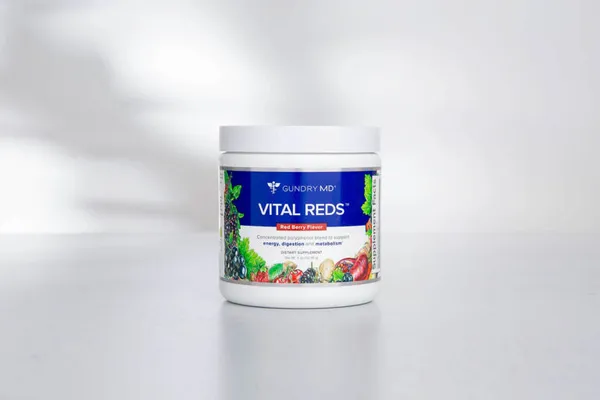
Vital Reds®
The Perfect Daily Pick-Me-Up†
Regular Price
$69.95
Account Price
$49.95

Home » Ketogenic Diet: How to Do it the Right Way!


And you know, the ketogenic diet has been around for quite some time. It gained a lot of notoriety when Dr. Atkins introduced it in the early seventies. And, Atkins revealed quite a bit of truth. But, there was one issue with his plan. Atkins just didn’t know that…
You see, there’s a wrong and right way to do it. Atkins didn’t really get it right. And the Paleo diets don’t actually get it right either. Why? A Paleo diet ISN’T ketogenic. Paleo diets rely heavily on animal proteins, but those proteins are converted into sugar through gluconeogenesis. We should be eating the right vegetables high in protein.
It’s just not protein you should be relying on…
That’s right, f-a-t fat. That doesn’t mean “fattening” foods like grains and sugars. It means HEALTHY fats. Here’s what the breakdown should look like.
Let’s talk about mitochondria for a second. A long long time ago – we’re talking hundreds of millions of years – the precursors to all living cells engulfed some prehistoric bacteria and that bacteria evolved into what we know as mitochondria.
These mitochondria developed a symbiotic relationship with their host cells – that means the bacteria needed the hosts and vice versa. So, the bacteria stayed around and began to produce the energy-generating molecule called ATP. ATP (Adenosine triphosphate) is often called the “molecular unit of currency” when it comes to cells transferring energy to one another. The thing about ATP is that all cells need it in order to function properly.2
So, this ATP producing bacteria – aka mitochondria — actually have their own DNA. And when their host cells divide, the mitochondria follows suit. Not only that, but your mitochondria shoulder the most of the workload when it comes to handling the calories you take in. They use sugars and fats to produce ATP in a sort of assembly line. But they can only do so much before they have to rest.
Until recently, it worked like this…

Your mitochondria worked nonstop during the day. They’d push push push – turning all the sugar and protein you ate into ATP. Then, at night, they slowed down – sleeping while you slept and sort of reverting to a slower burn since your body was no longer taking in sugar and protein.
And here’s the important part – during this slow time, they’d rely on a special form of fat called ketones. (Now, you see where we get the word ketosis, right?)
Now, ketones are normally made from fat cells once sugar supplies start running low. So at night, when you’re not eating, your mitochondria draw on your “battery” power in the form of ketones – made from fat cells – and then they can continue to make essential stores of ATP.
It used to be that in the summer when food was abundant, your mitochondria would get bogged down with all the extra food you were consuming, so they’d refuse to process stores of sugar and protein – and that extra food would turn to fat and get dumped into your belly.
But, it wouldn’t have been that big a deal because when winter rolled around, your mitochondria could slow down. See, you wouldn’t have been eating much, you wouldn’t have been able to because there wouldn’t have been much food around.
So, without new sugar around, the old fat you gained in summer could be used by your body to make ATP. Sending fat in the form of ketones to mitochondria during periods of food scarcity is what your body was built to do. If that’s the theory you’re working with, Atkins plan should work.
But here’s the thing – these days, food is ALWAYS available, day and night, in season or out of season… It’s throwing off your natural rhythm, and making ketosis harder to achieve.
So why not just cut back on sugar and protein and burn all that stored fat as fuel? Or slow down eating in the winter? Well, that’ll help, for sure… but our bodies are more complicated than that.
Atkins thought you could trick your body into a state of ketosis. He thought this would help you burn stored body fat. But, the thing is your mitochondria can’t process fat directly from your fat cells. Instead, an enzyme called hormone-sensitive lipase has to turn your stored fat into a usable form of fat – a ketone.
But, let’s say your insulin level is high. If that’s the case, your brain assumes that you’re likely trying to eat to excess to store energy for winter. So, it turns everything into fat so you’ll be able to survive when food gets scarce. Furthermore, your brain assumes that the last thing you want to do is transform that fat into ketones. So, insulin blocks hormone-sensitive lipase from working.
On the other hand, if it’s winter and you’re not eating much, hormone-sensitive lipase is unblocked because there is no insulin being produced—and away you go, making ketones to send to your mitochondria. And yes, there was a time when ketones kept people alive during times of scarcity.
But, the fact of the matter is…
We don’t experience times of extreme abundance and extreme scarcity anymore. You can get the same food in winter at your grocery store that you ate all summer long!
So, your insulin level stays high, and your mitochondria go on strike. You can’t access your stored fat because high insulin is blocking hormone-sensitive lipase.
The problem is…
Even if you cut sugar, your insulin levels stay high because of all the protein you’re consuming – yes, even on the Atkins or a Paleo diet.
That extra protein morphs into sugar which causes the release of insulin, which blocks hormone-sensitive lipase, preventing fat from converting to ketones.
And when that blockage happens, so can the following health issues –
In order to avoid those issues and the result of storing more fat, you’d have to cut out both sugars cut down on protein. It’s the only way to really stop the process. Wait? Cut out both sugar and protein? Fat chance – you might say. And you’d be right!

Low-carb, high-protein diets are not the answer. The answer is significantly decreasing the two biggest sources of insulin-raising calories — sugar and protein. You’ve got to do this to give your mitochondria a break and allow your insulin level to drop.
The good news is you can actually eat or drink the ketones that plants have already made for you. That’s right, lots of plant fats are composed of ketones.
For starters, those oils I mentioned above can do a great deal for you.
And the ketone in butter, butyrate, is the short-chain fatty acid in butter, goat butter, and ghee (clarified butter). It’s another source of ketones. Just make sure you’re buying French or Italian grass-fed butter if you’re going for cow’s milk butter at all.
There’s a right way and a wrong way to go ketogenic. Remember, protein is as much an enemy in excess as are sugar and carbs. Sadly, most people on the ketogenic diet eat WAY too much protein – it’s the reason many ketogenic dieters will never get into ketosis.
You can swallow ketones all day long, but if you keep chowing down on animal proteins, you’ll keep your insulin levels high. And then you’ll never be able to break your own fat down into ketones.
So stick to Plant Paradox-approved veggies and remember the 80/10/10 ratio –
That’s how you get your body into the right kind of ketogenic state.
Sources
Make Gundry MD™ a part of your health and wellness lifestyle
Exclusive discounts, early access, free US shipping, Subscribe & Save!
Three of our bestselling gut-supporting Gundry MD formulas join together to create this digestion-boosting bundle.
Three of our bestselling gut-supporting Gundry MD formulas join together to create this digestion-boosting bundle.
Uncover the science behind our premium-quality ingredients and how they can contribute to your health goals.
Our most popular products
Best Seller
Fave
The Ultimate Gut Guardian
Regular Price
$69.95
Account Price
$49.95
Best Seller
The Perfect Daily Pick-Me-Up†
Regular Price
$69.95
Account Price
$49.95
Gundry MD Coupons
Active Advantage Coupon
Energy Renew Coupon
Lectin Shield Coupon
Metabolic Advanced Coupon
Polyphenol Dark Spot Diminisher Coupon
Polyphenol Rich Olive Oil Coupon
PrebioThrive Coupon
Gundry MD Reviews
Active Advantage Customer Reviews
Bio Complete 3 Customer Reviews
Energy Renew Customer Reviews
Polyphenol Dark Spot Diminisher Customer Reviews
Polyphenol-Rich Olive Oil Customer Reviews
Most Popular Gundry MD Articles
5 Ways to Remove Lectins From Your Favorite Foods
Weekday Recipe Ideas For Breakfast, Lunch, And Dinner On A Lectin-free Diet
Top Foods For Mitochondrial Uncoupling
The Truth About Lectins In Rice: Does Rice Have Lectins?
The Dr. Gundry Diet Food List: A Comprehensive Lectin-Free Diet Plan
Is Wheatgrass Really Good For You?
A Quick Cereal Recipe For Your Breakfast (Lectin-free)
A Low-Lectin Lifestyle: Are Cucumbers High In Lectins?
Consuming Dairy Products On A Lectin-free Diet: What To Eat And What To Avoid
The Health Benefits Of The Coconut
What Dr. Gundry Wants You To Know About Chia Seeds
A Comprehensive List of “Deadly” Nightshades
7 High Sugar Fruits To Ban (Plus, Which Fruits To Eat Instead)
Reducing Dietary Lectins: Do Almonds Have Lectins?
How To Make Tomatoes Safer To Eat
Dr. Gundry’s Carrot Cake Muffins Recipe (Lectin-free)
How to Kick-Start a Lectin-free Diet (the 3-day detox)
Loading...