

Best Seller
Fave

Total Restore®
The Ultimate Gut Guardian
Regular Price
$69.95
Account Price
$49.95
Best Seller
Vital Reds®
The Perfect Daily Pick-Me-Up†
Regular Price
$69.95
Account Price
$49.95

Home » Stop Eating So Much Protein! (the truth about high protein diets)


The high protein diet has been trendy for more than a decade. Hard boiling eggs and packing them up to take to work for lunch – day after day. A bag of turkey jerky in the car. Protein bars. Blocks of cheese for a snack.
Now, getting a sufficient amount of protein is essential to power your body and keep your muscles strong and healthy. You need the protein you eat to give you all the essential amino acids that supply the building blocks of protein you cannot make yourself. But chance are, you’re eating WAY too much protein – especially if you’re a regular meat-eater.
Cutting back on protein may seem worthy of concern – especially if you’re used to hitting the gym every day to lift, or if you’ve always heard that protein is healthy. But, rest assured … The Plant Paradox plan won’t hinder muscle growth or keep you from getting the protein you need – it’ll just chance WHERE you get the protein, and help you get the right amount. High protein vegetables are a great way to get what you need. Is there such a thing as consuming too much protein?
Turns out, many Americans consume far more protein – especially animal protein – than they need.
Well, most of the time, protein recommendations are based on your lean body mass – not on your overall weight. Of course, this demands a few complex calculations.
However, there’s a very well-respected doctor at the The Longevity Institute at the University of Southern California who has figured out a way to make it really easy for you.
And, Dr. Valter Longo and I both agree: You only need 0.37 grams of protein per kilogram of body weight.3
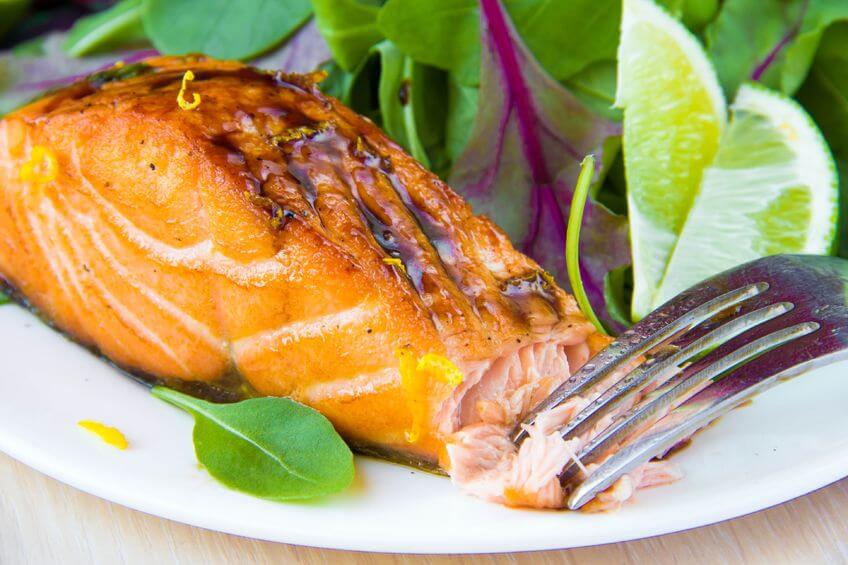
Now remember, the ideal diet is plant based. Lean proteins like wild-caught fish are where you want to focus when you’re choosing animal proteins, but even then, 3-5 oz of animal protein a day is PLENTY. You’ll get the most nourishment by eating lots of greens, a heap of lectin-free vegetables, and by really limiting your fruit intake. Instead, choose the right cooking oils, and use them to dress your salads. Throw in some almonds, walnuts, and hazelnuts for snacking, and you’re pretty good to go.
And avoid conventionally raised animal protein as much as possible.
You see, one of the biggest issues when it comes to the types of protein Americans eat is that the government subsidizes corn, other grains, and soybeans so they can be cheaply supplied to industrial-farmers. The farmers then force their animals, poultry, and even farm-raised fish to feed on these lectin-heavy foods.
And when you eat them… you’re eating all those lectin-laden foods that destroy your gut and weigh you down. Not good.
But how much protein exists in the proteins we eat?
Well, let’s look at a few foods to get a general idea.
You’ll get around 20 grams of protein from the following common foods –
Now, all of these numbers can get confusing, I know. So just remember this simple rule when it comes to your daily intake of protein:
It’s as easy as that. One 3 ounce serving of protein a day is really close to what you need. Again, there’s leeway on the serving size based on Dr. Valter Longo’s equation.
And please, don’t fall into the “protein-mixing” trap. Have you heard protein pushers use that phrase? Or the phrase “protein combination”?
Basically, they want you to eat all essential amino acids at every meal. Nonsense!
Seriously, this is a ridiculous notion – especially from an evolutionary standpoint.
Do you really think your ancestors spent time examining each bite of food, worrying about what kind of amino acids they took in at each meal? The thing is …
So, you don’t need a fresh batch of each and every amino acid from new sources of protein every day. You just don’t.
Furthermore, did you know that we recycle approximately 20 grams of our own protein every day?
That’s right, the protein that has been shed from our intestines and mucus gets recycled.
Turns out, both mucus and the cells that line your gut contain protein. So, when mucus gets made, or the cells that make up your gut lining die and are replaced, you digest the proteins. Right in your gut. So how about a round of applause for your very economical, very efficient body?
In fact, you could probably even eliminate even more of the already low protein recommendation above because you’re recycling your own protein every day. The human need for protein is actually shockingly small.
Maybe this…
In fact, you’d likely be exceeding your protein needs depending on your weight – and I am not even counting the protein in all the vegetables you’d be eating.
And that’s especially true if you want to build muscles. Think about some of the most muscular members of the animal kingdom, like gorillas and horses. What do they have in common? They’re vegetarians.
But how much protein is in your veggies? Well, half a cup of steamed cauliflower yields 1 whole gram of protein. A medium baked sweet potato contains around 2 whole grams of protein. What about an artichoke? Can you guess?
Turns out, an artichoke contains around 4 grams of protein.
Seriously, it adds up pretty quickly.
If you’re worried about under-doing your protein intake on The Plant Paradox, rest assured. You’ll be getting more than enough protein to continue working out and making progress, feed your kids so they can grow up strong and healthy, and make it through your own day feeling energetic and able to do whatever comes your way.
Read more:
Disclosure: The GundryMD team creates these articles as a way to provide you with the latest information on health and nutrition. Unfortunately, we cannot make specific product recommendations for our website visitors, such as “ProPlant Complete Shake” or “Primal Plants” Please consult with your healthcare provider to determine the best products for you.
Sources:
1. https://www.ncbi.nlm.nih.gov/pmc/articles/PMC2673798/
2. https://www.ncbi.nlm.nih.gov/pmc/articles/PMC4657121/
3. https://healinghistamine.com/interview-fasting-mimicking-diets-for-mast-cell-activation-allergies/
Make Gundry MD™ a part of your health and wellness lifestyle
Exclusive discounts, early access, free US shipping, Subscribe & Save!
Three of our bestselling gut-supporting Gundry MD formulas join together to create this digestion-boosting bundle.
Three of our bestselling gut-supporting Gundry MD formulas join together to create this digestion-boosting bundle.
Uncover the science behind our premium-quality ingredients and how they can contribute to your health goals.
Our most popular products
Best Seller
Fave
The Ultimate Gut Guardian
Regular Price
$69.95
Account Price
$49.95
Best Seller
The Perfect Daily Pick-Me-Up†
Regular Price
$69.95
Account Price
$49.95
Gundry MD Coupons
Active Advantage Coupon
Energy Renew Coupon
Lectin Shield Coupon
Metabolic Advanced Coupon
Polyphenol Dark Spot Diminisher Coupon
Polyphenol Rich Olive Oil Coupon
PrebioThrive Coupon
Gundry MD Reviews
Active Advantage Customer Reviews
Bio Complete 3 Customer Reviews
Energy Renew Customer Reviews
Polyphenol Dark Spot Diminisher Customer Reviews
Polyphenol-Rich Olive Oil Customer Reviews
Most Popular Gundry MD Articles
5 Ways to Remove Lectins From Your Favorite Foods
Weekday Recipe Ideas For Breakfast, Lunch, And Dinner On A Lectin-free Diet
Top Foods For Mitochondrial Uncoupling
The Truth About Lectins In Rice: Does Rice Have Lectins?
The Dr. Gundry Diet Food List: A Comprehensive Lectin-Free Diet Plan
Is Wheatgrass Really Good For You?
A Quick Cereal Recipe For Your Breakfast (Lectin-free)
A Low-Lectin Lifestyle: Are Cucumbers High In Lectins?
Consuming Dairy Products On A Lectin-free Diet: What To Eat And What To Avoid
The Health Benefits Of The Coconut
What Dr. Gundry Wants You To Know About Chia Seeds
A Comprehensive List of “Deadly” Nightshades
7 High Sugar Fruits To Ban (Plus, Which Fruits To Eat Instead)
Reducing Dietary Lectins: Do Almonds Have Lectins?
How To Make Tomatoes Safer To Eat
Dr. Gundry’s Carrot Cake Muffins Recipe (Lectin-free)
How to Kick-Start a Lectin-free Diet (the 3-day detox)
Loading...