

Best Seller
Fave

Total Restore®
The Ultimate Gut Guardian
Regular Price
$69.95
Account Price
$49.95
Best Seller
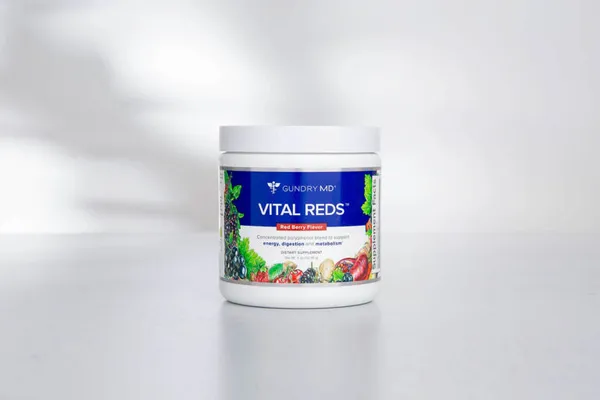
Vital Reds®
The Perfect Daily Pick-Me-Up†
Regular Price
$69.95
Account Price
$49.95

Home » What You Should Know About Grain Free Flour (Plus Recipes!)


If you’re trying to eat gluten-free, you have so many options available to you. Grain-free flours and gluten-free flour blends are everywhere, and they can be used in all of your favorite recipes as a healthier alternative to wheat flour.
The beauty of grain-free flours is that they can be substituted into any recipe and no one will be the wiser. Well, except perhaps your gut – which will be much happier.
Grain-free simply means that the flour does not come from any kind of grain. Instead, it comes from a root, a nut, or a fruit.
Examples of Gundry-approved grain-free flours include:
These flours also have the bonus of being full of essential vitamins, minerals, and fiber. Almond and coconut flours are particularly high in fiber. And green banana flour has the same resistant starches as green bananas – it’s an amazing prebiotic for your gut bugs.1

Before diving in, there’s one key thing you should know about cooking with grain-free flours. They’re often not a straight swap for whole-grain flours. Gluten-free bread recipes, and other baked goods, often require a mix of several of these flours to obtain the right texture and strength for optimal baking. As well as baking soda or baking powder.
So, take some time to experiment with these flours. Even better, just follow someone else’s recipe. You can also purchase an all-purpose flour blend that’s gluten-free and that already has those ratios nicely sorted. Or you can use an ingredient known as xanthan gum to also improve the structure and chewiness of your baking.
Starchy root flours are some of the most popular – and delicious – grain-free flours on the market. Let’s take a closer look at some of these substitutes for regular flour.
Cassava Flour – Also known as yuca, cassava is a root vegetable, and it’s not too different from carrots, beets, and parsnips. Because it’s nut, grain, and gluten-free, this flour is perfect for those with allergies and intolerances. It’s also a soft, fine flour that’s said to be the most similar to wheat flour.2
Arrowroot Flour – Arrowroot flour is a fine starch which comes from the rhizome (or rootstalk) of several tropical plants. This natural thickener is often used in place of cornflour. Because it’s gluten-free, it’s also used as a replacement for wheat flour.3
Tapioca Starch Flour – Tapioca flour is closely related to cassava flour because it comes from the root of the cassava. But it has its own distinct texture and advantages in cooking.
In basic terms: use cassava flour for baked goods that need structure, and use tapioca starch for binding or thickening. Tapioca is also a good flour to combine with other flours. Though it doesn’t rise well on its own, it improves the texture of baked goods – such as adding crispness to crusts.4
Green Banana Flour – Green banana flour is a highly nutritious choice of flour because it’s packed with potassium and full of prebiotic resistant fiber – just like green bananas. It also has a high starch content, so it can be useful for thickening soups and sauces as well as for baking.
Banana flour has a subtle banana taste, but it blends well with other flavors. It’s great for pancakes, muffins, cookies, and smoothies (for a prebiotic kick).5
Paleo Flour Blends – If you don’t want to mess around with figuring out the right blend of grain-free flours, there’s always a prepared flour blend at hand. A common one is called a Paleo flour blend. It’s usually a mix of almond flour, arrowroot starch, coconut flour, and tapioca flour.
It’s a popular blend because it’s gluten-free and grain-free. It also makes a really great tasting flour-mix, with just the right ratios to make perfectly structured baked goods. Always make sure to. Read the labels on paleo and other flour blends to make sure all ingredients are compliant.

It’s important to note that just because flour is labeled as gluten-free it may not actually be grain-free, or for that matter – lectin-free.
To put it in simpler terms – this list below includes all gluten-free flours. But they are not grain-free, and so they still contain nasty lectins, which you want to avoid.
 Corn flour
Then you have those gluten-free flours that come from legumes or other lectin-rich foods. These flours should also be avoided.
Let’s get started with some gluten-free recipes using grain-free flours. Here are a couple of Dr. Gundry’s favorite wheat-free, gluten-free baking recipes.
Makes 12 muffins
When you’re following a lectin-free, grain-free, gluten-free diet – as with Dr. Gundry’s program – these wonderful flour substitutes mean that you can bake almost anything. In fact, if you feed your gluten-free bread and baked goods to a wheat-eating friend, they probably won’t be able to tell that they’re eating a grain-free goodie.
If you’re really feeling adventurous, there’s one more flour that’s becoming popular on the market right now – cricket flour. Which is made from… you guessed it: crickets. It’s packed with protein and you only need a small amount in your baking to get the benefit of that protein hit. So, why not mix it up with some of your other new flours and make yourself some cricket blondies?
Learn More:
Can a Low-Gluten Diet Change Your Gut Flora?
5 Delicious Lectin-Free Mexican Food Recipes
Sources
1.https://www.glutenfreesociety.org/flours-grain-free/
2.https://www.goodhousekeeping.com/health/diet-nutrition/a19600044/cassava-flour/
3.https://www.britannica.com/plant/arrowroot
4.https://childrensnational.org/departments/celiac-disease-program/resources-for-families/celiac-video-gallery/celiac-diet-tapioca
5.https://www.foodnetwork.com/healthyeats/recipes/2015/06/experimenting-with-banana-flour-plus-chocolate-chip-cookies
Make Gundry MD™ a part of your health and wellness lifestyle
Exclusive discounts, early access, free US shipping, Subscribe & Save!
Three of our bestselling gut-supporting Gundry MD formulas join together to create this digestion-boosting bundle.
Three of our bestselling gut-supporting Gundry MD formulas join together to create this digestion-boosting bundle.
Uncover the science behind our premium-quality ingredients and how they can contribute to your health goals.
Our most popular products
Best Seller
Fave
The Ultimate Gut Guardian
Regular Price
$69.95
Account Price
$49.95
Best Seller
The Perfect Daily Pick-Me-Up†
Regular Price
$69.95
Account Price
$49.95
Gundry MD Coupons
Active Advantage Coupon
Energy Renew Coupon
Lectin Shield Coupon
Metabolic Advanced Coupon
Polyphenol Dark Spot Diminisher Coupon
Polyphenol Rich Olive Oil Coupon
PrebioThrive Coupon
Gundry MD Reviews
Active Advantage Customer Reviews
Bio Complete 3 Customer Reviews
Energy Renew Customer Reviews
Polyphenol Dark Spot Diminisher Customer Reviews
Polyphenol-Rich Olive Oil Customer Reviews
Most Popular Gundry MD Articles
5 Ways to Remove Lectins From Your Favorite Foods
Weekday Recipe Ideas For Breakfast, Lunch, And Dinner On A Lectin-free Diet
Top Foods For Mitochondrial Uncoupling
The Truth About Lectins In Rice: Does Rice Have Lectins?
The Dr. Gundry Diet Food List: A Comprehensive Lectin-Free Diet Plan
Is Wheatgrass Really Good For You?
A Quick Cereal Recipe For Your Breakfast (Lectin-free)
A Low-Lectin Lifestyle: Are Cucumbers High In Lectins?
Consuming Dairy Products On A Lectin-free Diet: What To Eat And What To Avoid
The Health Benefits Of The Coconut
What Dr. Gundry Wants You To Know About Chia Seeds
A Comprehensive List of “Deadly” Nightshades
7 High Sugar Fruits To Ban (Plus, Which Fruits To Eat Instead)
Reducing Dietary Lectins: Do Almonds Have Lectins?
How To Make Tomatoes Safer To Eat
Dr. Gundry’s Carrot Cake Muffins Recipe (Lectin-free)
How to Kick-Start a Lectin-free Diet (the 3-day detox)
Loading...